AdaptiveMomentumRibbon
AdaptiveMomentumRibbon combines a Pine-based momentum ribbon with Keltner
context, structural invalidation, and risk-sized entries. Pine performs the
signal calculation while TypeScript handles position state, exits, and order
planning.
Visual overview
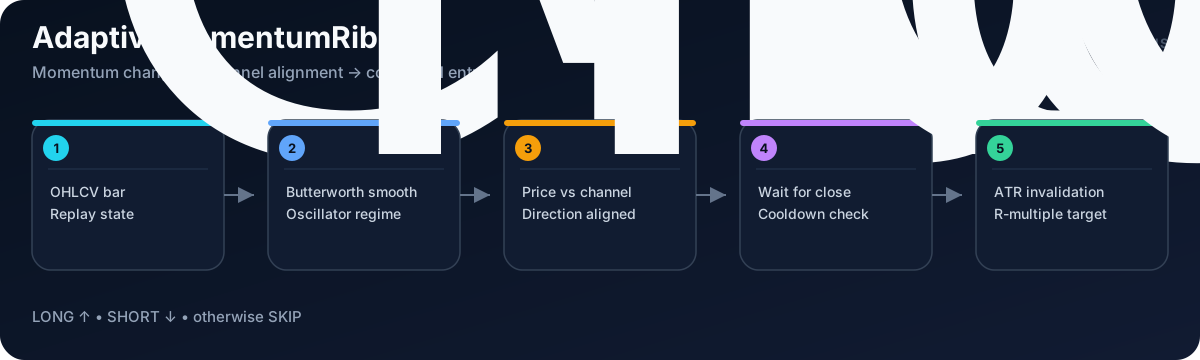
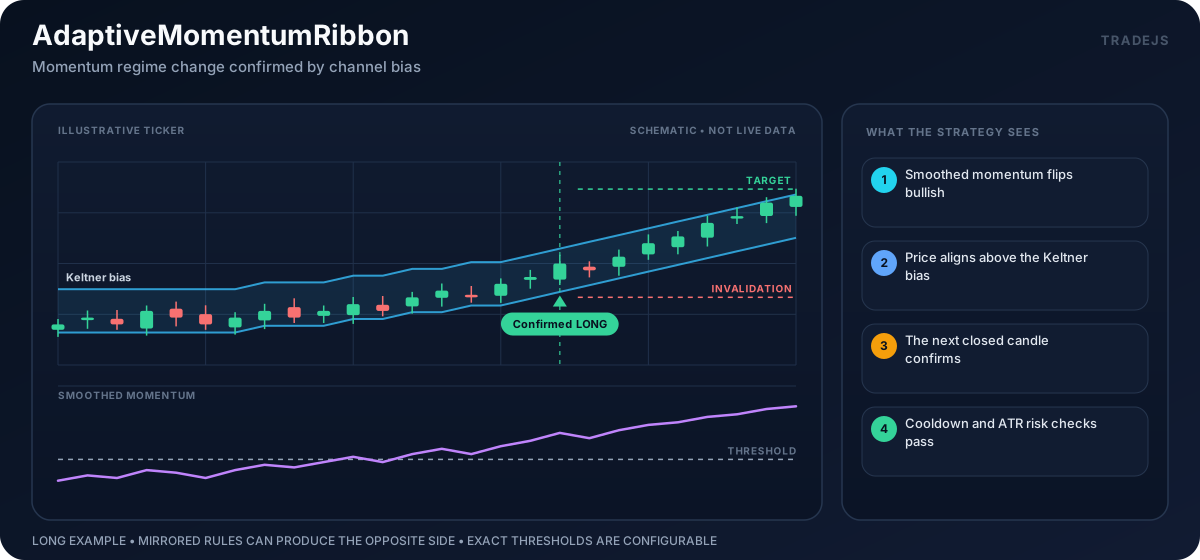
The illustrations are schematic, not market data. Exact thresholds, confirmation rules, and risk parameters come from the active strategy config.
Entry Logic
core.tsloads Pine code usingloadPineScriptFile('adaptiveMomentumRibbon.pine').- Takes recent candles (
AMR_LOOKBACK_BARS) and runs Pine viarunPineScript. - Reads latest plot values:
entryLong,entryShortinvalidated,activeBuy,activeSellsignalOsc,kcMidline,kcUpper,kcLower,invalidationLevel
- If both entry signals are
true, strategy skips (conflict). - If a position exists:
- closes on opposite signal
- optionally closes on invalidation (
AMR_EXIT_ON_INVALIDATION)
- If no position and entry signal is valid:
- applies side config (
LONGorSHORT) - places a structural stop beyond the Pine invalidation/Keltner level
- derives an R-multiple target and risk-sized quantity
- rejects poor signal-time execution geometry when configured
- returns
entry
Exits
CLOSE_BY_AMR_SIGNAL— opposite signalCLOSE_BY_AMR_INVALIDATION— invalidation whenAMR_EXIT_ON_INVALIDATION=true
Configuration keys
The keys are grouped by purpose. Common runtime, AI, ML, and position-sizing keys keep the same meaning across the built-in strategies.
| Group | Keys | Purpose |
|---|---|---|
| Risk estimates | RISK_FEE_RATE, RISK_SLIPPAGE_BPS, RISK_MARKET_IMPACT_BPS | Estimate one-way fees, slippage, and market impact for position sizing and reward-to-risk checks. Backtest execution costs are configured separately. |
| Runtime and decision services | ENV, INTERVAL, MAKE_ORDERS, CLOSE_OPPOSITE_POSITIONS, BACKTEST_PRICE_MODE, AI_ENABLED, AI_MODE, MIN_AI_QUALITY, ML_ENABLED, ML_THRESHOLD | Select the runtime mode and candle interval, control order placement, and enable optional AI or ML decisions. CLOSE_OPPOSITE_POSITIONS is not used by the current AMR hook logic. |
| Momentum model | AMR_LOOKBACK_BARS, AMR_MOMENTUM_PERIOD, AMR_BUTTERWORTH_SMOOTHING, AMR_WAIT_CLOSE, AMR_CONFIRM_ON_NEXT_BAR | Set the input history, oscillator period and smoothing, and closed-bar confirmation behavior. |
| Signal quality | AMR_MIN_SIGNAL_OSC_ABS, AMR_MIN_SIGNAL_OSC_ABS_LONG, AMR_MIN_SIGNAL_OSC_ABS_SHORT, AMR_REQUIRE_KC_BIAS, AMR_MIN_BARS_BETWEEN_SIGNALS | Set the oscillator-strength floor, optional Keltner bias, and signal cooldown, with directional oscillator overrides. |
| Keltner channel | AMR_KC_LENGTH, AMR_KC_MA_TYPE, AMR_ATR_LENGTH, AMR_ATR_MULTIPLIER | Set the channel midline, moving-average type, ATR period, and band multiplier. |
| Delayed-entry risk | AMR_MIN_TP_DISTANCE_BPS, AMR_MAX_DELAY_RISK_TP_RATIO, AMR_DELAY_RISK_MOVE_MULT | Reject entries with too little target distance or too much signal-to-fill risk movement. |
| Target, stop, and exit | AMR_STOP_BUFFER_PCT, AMR_TARGET_R_MULT, AMR_EXIT_ON_OPPOSITE_SIGNAL, AMR_EXIT_ON_INVALIDATION | Set the structural stop buffer, target distance, and exit triggers. |
| Figures | AMR_SHOW_INVALIDATION_LEVELS, AMR_SHOW_KELTNER_CHANNEL, AMR_LINE_PLOTS | Choose the levels, channel, and Pine plots included in chart figures. |
| Risk and side policy | MAX_LOSS_VALUE, LONG.enable, LONG.direction, LONG.minRiskRatio, SHORT.enable, SHORT.direction, SHORT.minRiskRatio | Set the loss budget and enable each direction with its minimum reward-to-risk ratio. |
Indicators Used (What Each One Means)
Pine Series Used by the Strategy
entryLong,entryShort— binary entry signals.activeBuy,activeSell— active buy/sell context flags.invalidated— signal invalidation flag.signalOsc— smoothed AMR oscillator.kcMidline— Keltner center line.kcUpper— Keltner upper band.kcLower— Keltner lower band.invalidationLevel— current invalidation level.
Lines Rendered in figures
- all series listed in
AMR_LINE_PLOTSare exported tofigures.lines - this allows explicit control over chart overlays in runtime/backtests
Signal Payload
figures:
- lines selected via
AMR_LINE_PLOTS - entry point marker
additionalIndicators.amr:
entryLong,entryShort,activeBuy,activeSell,invalidatedsignalOsc- Keltner values and invalidation level
lineValuesmap for selected plots
Example Runtime Config
{
  "ENV": "CRON",
  "INTERVAL": "15",
  "AMR_LOOKBACK_BARS": 200,
  "AMR_MOMENTUM_PERIOD": 32,
  "AMR_BUTTERWORTH_SMOOTHING": 4,
  "AMR_WAIT_CLOSE": true,
  "AMR_CONFIRM_ON_NEXT_BAR": true,
  "AMR_MIN_SIGNAL_OSC_ABS_LONG": 1.75,
  "AMR_MIN_SIGNAL_OSC_ABS_SHORT": 1.25,
  "AMR_KC_LENGTH": 20,
  "AMR_KC_MA_TYPE": "EMA",
  "AMR_ATR_LENGTH": 14,
  "AMR_ATR_MULTIPLIER": 2,
  "AMR_STOP_BUFFER_PCT": 0.05,
  "AMR_TARGET_R_MULT": 2.4,
  "AMR_EXIT_ON_INVALIDATION": true,
  "AMR_LINE_PLOTS": ["kcMidline", "kcUpper", "kcLower", "invalidationLevel"],
  "LONG": { "enable": true, "direction": "LONG", "minRiskRatio": 1 },
  "SHORT": { "enable": true, "direction": "SHORT", "minRiskRatio": 1 }
}
Run
npx @tradejs/cli backtest --user root --config AdaptiveMomentumRibbon:amr-default --connector bybit --timeframe 15
npx @tradejs/cli signals --user root --timeframe 15